Tuesday, March 26, 2013

Ready or Not, Here I Come

     I leave for Rwanda on Saturday.  Well, actually, I leave for Washington, DC on Saturday.  After a whirlwind tour of our nation's capital, including several gut-wrenching hours at the US Holocaust Memorial Saturday, we fly first to Ethiopia, then onto Rwanda on Easter Sunday.

     I. Am. Not. Ready.

I'm close.  I really am.  But not quite close enough.  The big stuff is done.  I think.
Done enough.  I guess.

     I have the airline tickets in hand. Our itinerary is set and the ground expenses paid for.  I checked in with my doctor and got my antimalarial drugs.  I've made sure our state Senator's people and the US State Department and the US Embassy in Rwanda know when we're arriving and where we'll be when and such.  I've answered as many of the parents' questions as I can.  I've collected donations and purchased gifts for the friends I've made over there.  I've sent my boss approximately 1,942 emails about what work I've done up ahead, what work can wait until I come back, and what to do about the work that is neither done nor can wait.  I've made piles of things to pack--which the dogs have knocked over on a daily basis.  I've re-piled things to pack.    I got a really nifty new backpack, because last year, Rwanda did my old backpack in.  I put together the super duper first aid kit that covers everything from a stomach ache to boy trouble. (True story, I packed hard candy and gum to help treat cases of the weepies. It's in between the triple antibiotic ointment and the pepto in my medical case.  This was a hard-learned lesson from traveling with NINETEEN teenage girls last year.)  I've rescheduled a dentist appointment.  I've paid for the Evil Genius' school lunches for the next month. And basically, I've been moving non-stop and talking in one never-ending run-on sentence for the past two weeks.

Exhale.

     Truth is, if our flight were leaving today, I'd be ready enough with the actual trip prep.  It's the mental preparation that I've fallen behind on.  When I say that Rwanda captured a bit of my soul last year, I'm not being melodramatic.  I absolutely cannot wait to get back there.  Except for the part of me that is dragging my feet. See, there is no separating the lush landscape and beautiful people of Rwanda from the ghastly, unspeakable horror of the genocide.  I expected the visits to the genocide memorials to be difficult.  I could not have imagined how deeply affected by it I would be.  It was impossible to process all of that emotion during the short time that I was there.  It has been a year, though, and I realize that I have actively avoided going back and working through it at all.  And now I'm returning.  During April.  The month that the Rwandan government has set aside for national days of remembrance. And I am not ready.

    It's selfish.  I know.  I don't want to allow myself to feel that pain, and I definitely don't want it to force me to address the almost meaningless comparisons that pain brings up for me.  I feel guilty about that.  Every Rwandan has their own story of enduring the absolutely unbearable during the genocide. And here I am avoiding even thinking about it in the abstract, because it will be painful?  That the closest experience I have in comparison is that I struggle to forgive my father for not being the kind of father I wanted to have?  I'm ashamed. 

     I've had a year to reflect.  I've had a year to deal with what I've experienced.  I've had a year to be a better woman.  And if I am being honest with myself, I've squandered that time.  But I'm getting on an airplane and going back there in just over three days.  I'm traveling with a group of some of the kindest,  most compassionate people I've ever known.  They are so young--still in high school--and they are going to look to me for support or at least an example.  So, today I stop stalling.  The first step to solving a problem is admitting you have one, right?  Well, then I guess I've taken a step in the right direction.  


Wednesday, March 6, 2013

Hiking Mt. Whelm

    Sometime a week or so ago, I went over the edge.  I'm overwhelmed.  Like every woman I know, I spend almost all of my time at the very edge of "whelm."  My toes dangle right there at the crest. Lately, I've found myself hanging over the rock face by one hand.  I've been sick.  I've been worried about my children.  There are inflexible deadlines at work coming at me and they seem to be speeding up. There's volunteer work I'm responsible for and not quite pulling off, it seems.  There's family stuff that is messy and complicated like everyone's family stuff is.  There's this cocker spaniel puppy that keeps forgetting he's housebroken.  I leave for Rwanda in three weeks.  I'm not even close to ready.  My house looks like a fraternity house on a Sunday morning after the big party.  It's all become too much for me.

BUT

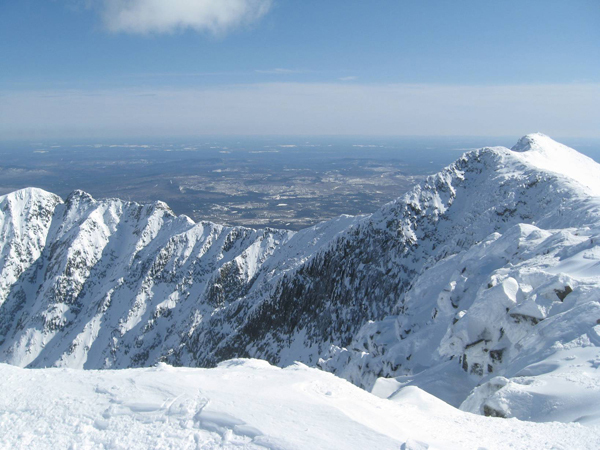
     The view here is breathtaking.  It would have to be, otherwise, why would intelligent women spend so much time here?  It's all about the view.


     See, at the peak of Mt. Whelm is where we can see the possibilities of made beds, clean bathrooms, and all the laundry being folded and put away.  They are just over that next ridge.


We get a birds' eye view of those work projects totally rocked out.


Just across the valley we can see our children's successes--making the honor roll, hitting the curve ball, beasting that audition for the wind ensemble.  Here, above the tree line, our marriages are joyful and romantic and sexy.


     Of course, it's dangerous at the precipice.  The weather is unpredictable.  It gets really cold at night.  The snow remains year round.  There is always the threat of an avalanche.  The air is thinner, up here, too.  Sometimes, it's hard to breathe.  Sometimes, our packs are too heavy or our footing unsure and we go over the edge.

Photo courtesy of Bangor Daily News

But that view.


Saturday, February 23, 2013

Beauty is Only Skin Deep

     I'm one of those fortunate women who has good skin.  Even when I was a teenager, acne was not an issue for me.  Don't worry, I had--okay, have-- as many body-image issues as any good American girl.  They are just related to my baby-fine, thin, hopeless hair and my weight, which has roller-coastered pretty wildly since I was in high school.  My skin, though, has always been lovely. 

     So, when I got a pimple next to my nose a month ago, I thought nothing of it.  I kept it clean.  Concealed it with make-up when I was at work.  Went back to fussing over my hair that now sports a skunk stripe of grey, right down my part.  Because, I don't have bad hair days.  I have bad hair decades.  Lucky for me, my cousin married a magician of a hairdresser.  She keeps my hair and my concern about it in line. 

     The spot didn't go away.  It got bigger. And a new cluster of pimples joined it.  I started washing my face with the "blemish fighting face wash"  belonging to one of the household's adolescents.  Then, this past weekend, my face erupted.  Swelling, oozing.  It. Was. Horrifying.  I looked like the Elephant Man--if he were a middle-aged woman.  I went to the doctor's.  She proclaimed it to be "some sort of nasty staph infection," and put me on two different kinds of anti-biotics.  Six days into the ten day course of medication and I'm finally starting to see some improvement.

    For this past week, though, I've lived through a brand new experience for me:  acute self-consciousness about my appearance.  I have to say, I didn't care for it at all.  It was pretty dreadful.    I cringed when people asked, "What happened to your face?"  I found myself actively avoiding socal interactions.  As much as I could, I stuck to my cubicle-of-doom.  I didn't have lunch in the breakroom.  I blew off exercise at the Y.  I even bowed out of a party at the home of one of my closest friends. (I'm sorry Kate.  I was hideous company--both because of my mood and my face.)

     My teenage years were as angst-filled as anybody's.  As an adult, I've been in plenty of challenging situations that I could have obsessed over.  I have never felt this terrible about myself before, though.  Intellectually, I know that this is a temporary condition that will pass.  I know it doesn't change the awesomeness of who I am.  It still feels awful. 

    I have long been an advocate of "true beauty" in women.  I'm really good at pointing it out to my sisterfriends, to my daughter, to the young women I mentor.  I guess I never really understood the depth of feeling--terrible feeling--that they have about themselves.  I underestimated the power of a negative self-image.  Now I understand it.  It's formidable. 

    
     I don't know how to combat it, yet.  I mean, the infection is healing and I can expect that my skin will clear up.  How do I make sure that I don't allow myself to feel that way again, though?  More importantly, how do I help the women I love stop feeling that way?
    

Saturday, February 9, 2013

Snow Day!

     I have lived in New England my entire life.  For 3-4 months out of the year, I have to deal with cold temperatures and snow.  My Fab. Fam. rather enjoys it.  Thanks to the wonders of technology AND my world travels, I have friends who live in places that don't get snow.  So here is a brief explanation of New England winter weather to answer those questions that have been coming at me over the past few days, since Nor'easter Nemo blew into the region.

     For starters, what's a Nor'easter?  A Nor'easter is basically a storm that circulates around a low pressure system off the northern Atlantic coast. It's similar to a tropical storm or hurricane (cyclone to my friends in the southern hemisphere).  It gets its name from the direction the winds come from--the northeast.  They usually occur between October and April corresponding to the Atlantic hurricane season.  They typically happen in a range from the east coast of Canada to about New York.   However, they could happen any time of year, and occasionally occur as far south as the Gulf of Mexico.  As the storm rotates, it picks up moisture from the Atlantic.  Because of the winter temperatures, instead of dropping heavy rains on the land, Nor'easters typically drop lots of snow.  Like its tropical counterparts, there are varying degrees of strength. 

     This particular storm is very large--large enough and strong enough that it became a "named storm,"  like a hurricane would be.  It is moving slowly, so it's been snowing for over 24 hours here.  Right now, we have over 2 1/2 feet (nearly a meter) of heavy, wet snow in our yard.  Not all snow is the same. Sometimes, snow is light and fluffy.  Other times it's dry and powdery.  Sometimes it is icy crystals.

    This storm also has had strong, sustained winds--30-50 mph/48-80 kmph.  When the winds are that high, the snow blows around,  diminishing visibility like a sandstorm does.  When that happens, then the "snow storm" becomes classified as a "blizzard."   Last night, we even had thundersnow. Thundersnow is the Evil Genius' favorite kind of weather.  It's a thunderstorm with snow instead of rain.  It's pretty spectacular. 


Picture Courtesy of the National Weather Service


     Most of our snowstorms are not this severe.  This is a once-in-a-while treat. (I have friends who would disagree with me on the "treat" bit.)  My folks live about an hour from here, right on the coast.  Because of the weight of the snow causing trees and electric poles to fall, they don't have power, and the news reports flooding in parts of their city from the extra high storm tide.  According to the news, there are over 400,000 households in Massachusetts without electricity right now.  There's another 150,000 in Rhode Island without power. The other New England states also have considerable power outages.  It's part of life in the northeast.  Here at the old homestead, though, we haven't lost any trees.  Our power is up.  The fire is roaring in our pellet stove (a fire place insert that burns compressed wood pellets for more efficient heating). 

  When the weather is this severe, we get what is called a "Snow Day." That means school and work are cancelled for folks who don't need to be out on the roads. Driving on a lot of snow is very much like driving on icy mud. Vehicles get stuck, they spin out, they slide and crash into other things. It's dangerous. So, yesterday The Evil Genius had no school. Thing 1 , Thing 2, and I didn't have to go to work.

      Even folks who don't care for the snow enjoy a Snow Day. It's like an unscheduled holiday. I spent my Snow Day cooking, reading magazines, and watching dumb television shows with the Evil Genius. I played cards. I spent WAY too much time on the computer, along with a whole bunch of other folks enjoying their Snow Day.  I checked in with my extended family. Everyone is fine. We're hardy folks in the northeast.

      Because my husband is in charge of food services at a university, where the students live, he didn't get a Snow Day. In fact, he was quite busy, working with the university leadership to make sure that there were places on campus for his staff to sleep over last night. It's very rare, but yesterday the governor called a "driving ban." Nobody but emergency workers have been allowed to drive on the roads. So my Personal Chef needed to make sure his staff was safe AND that the students could get fed today. He arranged for meals for the other emergency work crews--campus police, facilities maintenance staff, infirmary staff--that were staying on campus. He even developed plans for the highly possible event that there was a major power outage. He still made it home before the storm got too severe, though.  
 
      Right now, my boys and dogs are having a ball.  They have already got us cleared out.  Thing 2 and his best pals (twenty-year-olds, mind you) have plans for an epic snow fort.  No surprise, they have recruited My Personal Chef, the biggest kid of them all, to help.


    Not wanting to be left out, the dogs are loving it, too. Our chocolate lab is leaping into snow banks and rolling around in it. The cocker spaniel tries to keep up. He's way too small though, and just gets buried in the drifts.

     So that is what it is like when it REALLY snows.  Now, excuse me while I put on another pot of coffee and whip up something warm for my boys to eat.


Sunday, February 3, 2013

The Laundry Room Blues

     It's Sunday afternoon at the old homestead.  At the moment, the entire downstairs looks like a twister touched down inside a small appliance repair shop.  Our state-of-the-art washing machine--the one that promised everything from stain fighting to high speed to quiet operation to germ killing--has a blown bearing.  I know this because My Personal Chef has watched hours of how-to-fix-the-washing-machine videos and taken the whole thing apart and gone to two different hardware stores for expert advice and parts.  The pretty boys on the videos and the older guys in the plaid, flannel shirts at the stores all agree.  The bearing's gone. 
     It can be fixed.  Only thing is, even if my extraordinarily competent husband does it himself, it will be exorbitantly expensive.  This is the second major failure of this washing machine in the past year.  Last spring the big rubber gasket had to be replaced.  It cost hundreds of dollars, took weeks  for the part to come in, and then a technician had to come in to install it, because apparently it required some sort of magic tool made especially for this manufacturer's products.
     We haven't had the machine more than two years.  Although, it turns out that the washer was a model made about 6 years ago that apparently sat around in in a shipping crate in some port for a while.  At any rate, the manufacturer has discontinued the model, making the parts ridiculously pricey to get.  It really isn't cost-effective to repair the machine.  That bothers us.
     Call us old fashioned, but we take care of our things.  We teach our children to take care of their things.  (Just don't look at their bedrooms for any signs of our teaching taking root.)  We work hard at not being wasteful.  We take pride in learning the skills to repair things.   Okay my Personal Chef prides himself in knowing how to fix things, and I take pride in bragging about hitching my wagon to him. 
     Effective stewardship of our resources--our finances, our material goods, and our time--matters to us.  At one time, it was a widespread value, shared by most of our culture.  Today, though, we are encouraged to continuously replace our cheap things, rather than maintaining them.  Go ahead and try to name one thing that you own today that you purchased new that you don't expect to replace in the near future.  Unless you inherited it from your ancestors or found it at an antique sale or commissioned Amish artisans to create it for you, it's probably built with self-destruction and replacement in mind.  Clothing, furniture, electronics, tools, household goods...  all cheap.  All designed to be replaced with next season's colors, features, or styles.
     It bums me out. I don't WANT to shop for a new washing machine.  On the other hand, now that the laundry room is torn apart, maybe I can get that Man-o-Mine to replace the floor and put in a shower stall?  Now where did I put those color swatches?


Sunday, January 27, 2013

Lightning Strikes Twice

     On my way home from work Friday, I stopped off at a small, suburban strip mall and walked through the doors of a travel agency.  Unlike most of their regular customers, I wasn't booking a Disney cruise or a tour package through Italy.  I was there to pay for eleven round-trip tickets on Ethiopian Airlines to Rwanda.  As I handed over the check and signed the invoice, my hand shook a little. Because until that very moment, I didn't really believe that this was going to happen.  I really am going back to Africa!


     I was in second grade when I saw a National Geographic special about central Africa.  From that moment on, I dreamed of going to that part of the world.  I imagined traveling to the land of Dr. Livingston. I envied Jane Goodall with her apes.  I imagined going on safari, seeing hippos and giraffes up close.  As I got older, I learned more about the world, studying geography in college fueling a fascination for ecosystems I doubted I would ever see--jungles and savannahs and equatorial mountain ranges.  I learned about societies so different from my own with arts and customs and foods and economies that were totally unlike mine.  I never really thought that I'd actually be able to get there one day, though.


     And then I did.  Last February, I chaperoned a service-learning trip to Rwanda for high school students.  It changed my life in ways I still can't fully articulate a year later.


 Photo by Jason Marzini


     Nineteen years after the genocide, Rwanda is a study in resilience and hope.  It wasn't at all what I expected.  There is no way to adequately describe the effects of the genocide on the nation.  I cannot even describe the effects of visiting the genocide memorials on  myself.  It was as powerful and terrible an experience as I have ever had.  In more than one instance, it physically took my breath away.  So much horror.  And yet, almost every person I met spoke of forgiveness and of building a new Rwanda with a sincerity that awed me in its quiet strength.  Yes, sincere forgiveness.  Don't confuse that with justice.  Trials continue to this day.  Punishment is still meted out.  A teacher I met, who along with one sister was alone in his family to be spared during the genocide because they were away at school, explained it this way, "We don't forgive to make things better for the murderers.  We forgive for ourselves.  We forgive so we can get out of bed in the morning and carry on."

Photo by Jason Marzini


     And carry on this remarkable people does.  They marry, they raise children, they farm on every bit of land they can--most of it straight uphill on the mountains.  They study--the literacy rate has increased at an unprecedented rate over the past decade.  They start businesses.  They go to church.  They sing and dance and laugh.  Wonderfully hospitable people, it was a delight to spend time with Rwandans all around the country.    


     About the size of Maryland, Rwanda is the smallest African country.  The "Land of a Thousand Hills" is mountainous, lush, and stunningly beautiful.  It was not at all what I expected. 


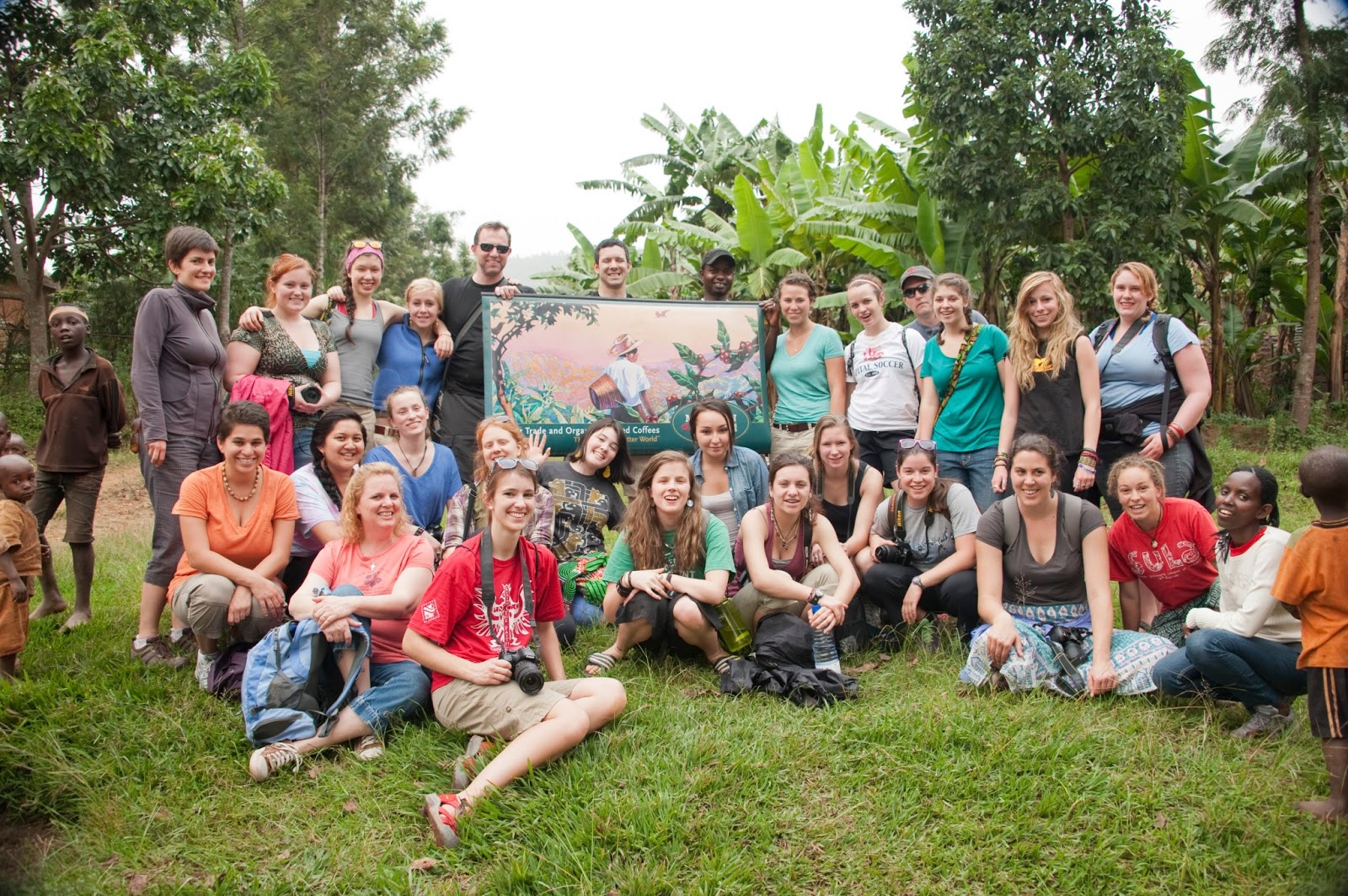
     As our group toured and worked and learned, we met people from all walks of life.  We met business leaders and poor village women.  We met the brightest high school students in the country and homeless boys.    We worked together and we played together.  We cheered on the national soccer team as they ran through drills when we happened to come across them practicing at a local stadium.  We helped build a library at a boarding school for street boys. We got schooled on weeding at a coffee collaborative run entirely by women that sells to Green Mountain Coffee here in America.  We hung out at the National Univeristy of Rwanda's campus radio station and rocked out to American pop remixed to Afrobeat. We spent two of the best days of my life working in a preschool. We crashed a National Geographic photoshoot (it was the coolest. thing. ever.).  And yes, we went on a safari.


     After three incredible weeks, I returned home to my real life.  I gave family and friends the gifts I brought back.  I showed off my pictures.  I told my stories.  And then  my African adventures were just a memory. Or so I thought.
     Because of technology, I have been able to maintain ongoing correspondence with several of the people I met in Rwanda.  Several high school students email me regularly to practice their English.  Alexis Gakumba and his brilliant wife Gyslaine, the owners of the Rwandan tour company that managed everything for us in Africa, chat with me frequently. 

Photo by Jason Marzini

This November, I was delighted when I was able to open my home for a week to Alexis.  It was Alexis' first trip to America.  He was here conducting business in Vermont, but had time for some visiting.  I had the extreme pleasure of being with him when he experienced several firsts:  bowling, snow, the ocean, Christmas trees and lights, skyscrapers, burgers and fries. 


     By the time Alexis had returned home to Rwanda, I was sorely homesick for his country and his people.  I had already been approached by the high school to consider chaperoning another trip this April.  So, I spoke to my boss and bargained with my husband and children.  It was decided.  I return to Rwanda on April 2nd.  My husband and  my children are talking about when "we all go together to visit Alexis.  How about next summer when school gets out?"  And suddenly, my world has expanded to include Africa. 
    Now I'm thinking about ways to make other little girls' dreams come true.  Alexis, Gyslaine and I have been imagining ways to connect young Rwandan students and American students in a distance-learning program.  We imagine an international training program in health care or maybe in tourism (why not both?!) that gives American and Rwandan youth marketable skills and a chance to build better futures for themselves.  I think my real African adventures have just begun.
    

Saturday, January 19, 2013

I Have A Dream

If you have been reading this blog you likely either know me, or you were introduced to me from my recent guest post at This Is Mommyhood.  So you know a bit about my Fab. Fam.

Years ago, when Thing 1 & Thing 2 were preschoolers, I worked at the child care center they attended.  A recent conversation with a former co-worker from those days reminded me of this story about my son.  In the spirit of Dr.Martin Luther King, Jr.'s dream where lovingkindness prevails over hatred, and all of our children have the chance to succeed together, I offer it to you.

Long before we had a diagnosis for Thing 2, of course, we had issues.  He was impulsive and disruptive. In preschool, he was the boy the other children blamed for anything that got spilled or lost or broken.  He was always the class clown and usually the class problem. Then this happened:

A local family adopted a Russian orphan.  He was nearly five years old.  As I understand it, he had been abandoned on a freight train at birth.  Before being adopted and coming to America, Ivan*  had spent his entire life in an orphanage.  (*name changed to respect his privacy.)  The social worker assisting in the adoption recommended to his new family that he spend time with American children in a school setting.  So, for a few days a week, Ivan attended my son's preschool class.

For the longest time, Ivan didn't speak.  Not even in Russian.  He sat under the teacher's desk and watched the class. After several days of this, Thing 2 started clowning around to get Ivan to interact with him.  He'd roll him balls or bring him books or make silly faces.  Ivan remained unmoved and my easily distracted boy bounced off to another activity.  The next day, though, my son was back with a different approach.  He crawled under the desk and simply sat with Ivan.  He stayed all afternoon.  His teacher was amazed, because it was the longest my son had ever sat for anything.

When Ivan's mother arrived to pick him up and found my son sitting with him, she burst into tears.  I was paged to come to the classroom.  I was already becoming "That Kid's" mother, and too frequently was called to address some difficulty that my boy had caused.  So when I came to the classroom to find Ivan's mother crying, my heart sunk.  What had my son done?!  And then she hugged me.  The boys' teacher explained everything, about how my son sensed what it was Ivan needed in a new friend.  How he stopped his usual antics to just sit quietly.  How my boy had been the classmate to show real kindness to Ivan. 

This beautiful incident didn't change my boy. He was still the boy who disrupted the class and spent more time in trouble than anyone else. It did show me, his teacher, one frightened boy and his mother though, that my son was so much more than just the trouble he causes.

It is important to remember that about people.  We are all more than our troubles, whatever you perceive those to be.  Dr. King was speaking about people who consider other people's  skin color to be trouble.  Today people talk about mental illness or poverty or immigration status or sexual orientation or, even still, skin color as trouble.  And that is all that they see when they look at a person. 

I have to admit to often forgetting that about my own son.  He is so much more than his mental illness.  And I love him with every fiber of my being. How much harder is it to remember that about strangers?  That is the task before us today, though.  As people all around the country remember the legacy of the great man who tried to make the world a better place for his children--and for everyone else in the process--we are charged with fulfilling his dream.  For me, the place to start has to be remembering that every individual is more than their trouble.

Where will you start?